

Please click on links below to see our other type charts.
Charting
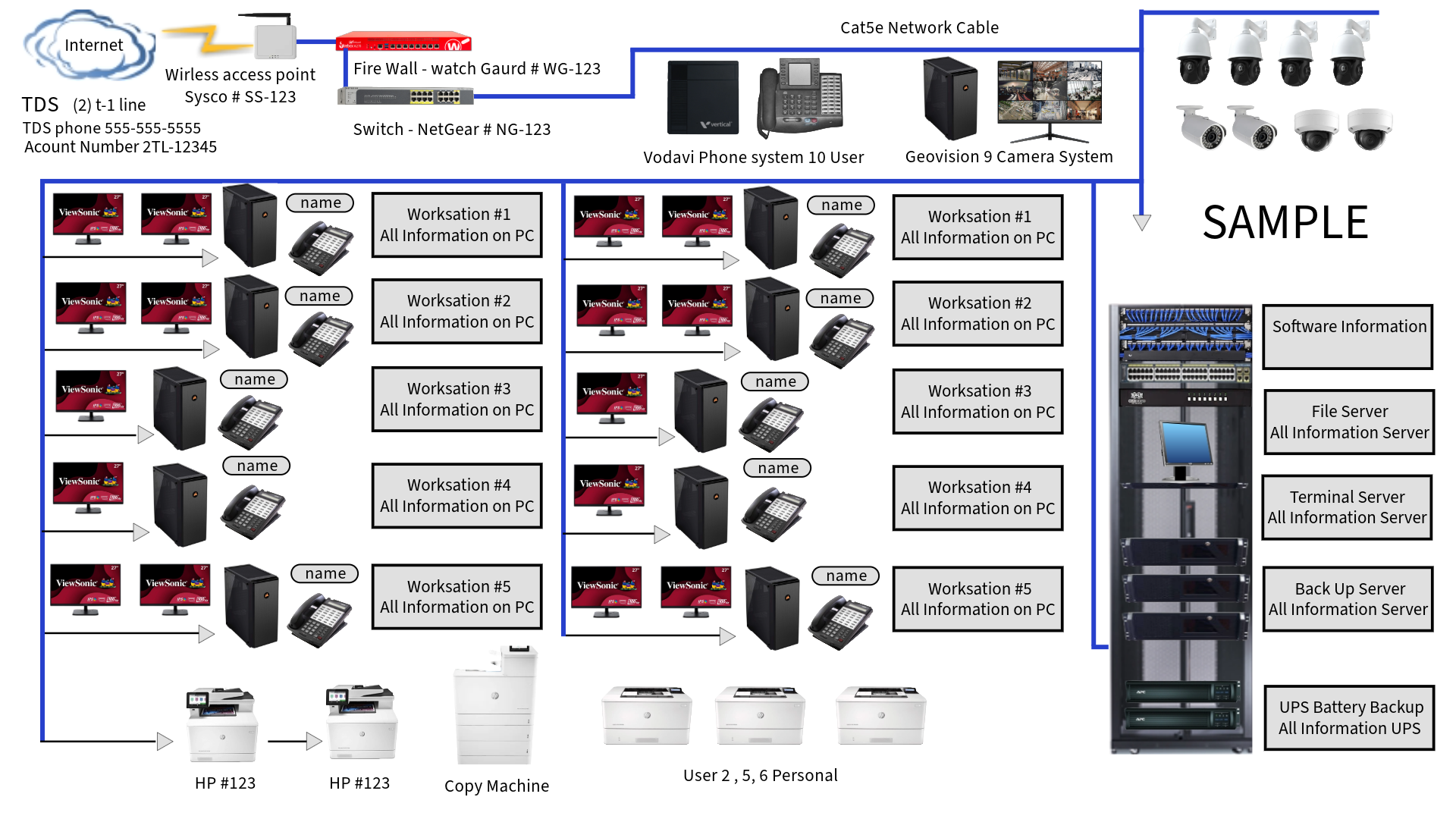
Initially, our process involves meticulously documenting every piece of equipment. This data is systematically organized into a comprehensive chart, enabling us to engage in informed discussions about your business. The chart serves as a single glance overview, offering a clear visual representation of our approach. Drawing from over three decades of experience, I have found that integrating all information into a unified chart significantly enhances organization and efficiency, resulting in an overall superior system.
For every minute spent in organizing, an hour is earned. -Benjamin Franklin
Tracking
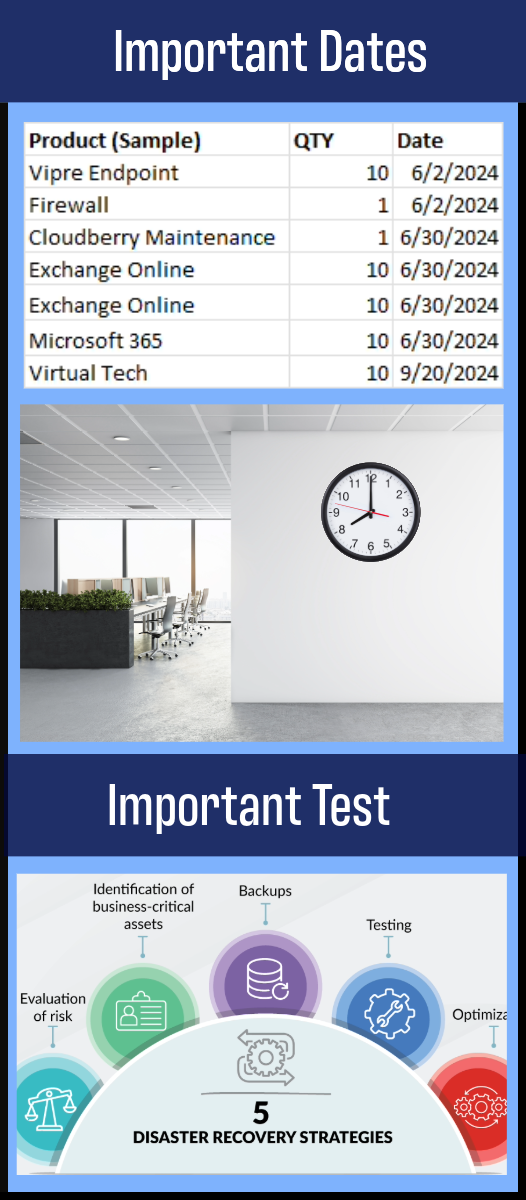
At UB Computers, our commitment is to meticulous tracking and management of our technology assets. We diligently monitor our yearly software license renewals to ensure continuous operation. Additionally, we keep a close eye on the age of our hardware and software, even those without expiration dates, to maintain an up-to-date inventory.
Understanding the importance of quick resolution during technical issues, we maintain detailed records of purchase sources, including manufacturer details and contact numbers. This proactive approach significantly streamlines our troubleshooting process.
Moreover, for heightened security and convenience, we securely store all critical passwords in an encrypted vault. This ensures that, should you ever forget a password, it is readily retrievable without compromising security.
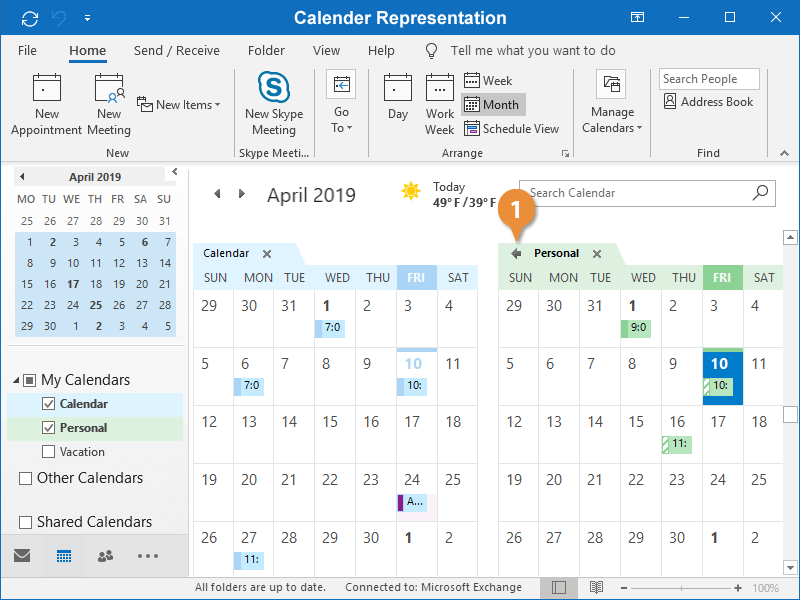
Beyond cataloging these essential details, we integrate them into our Outlook system, setting up reminders to ensure that no task or renewal deadline slips through the cracks.
At UB Computers, we leave no stone unturned in our quest to ensure seamless operations and optimal performance of all our technological resources.
A good system shortens the road to the goal. -Orison Swett Marden
Please click on links below to see our other type charts.
Testing
We diligently implement every possible measure to preempt problems in our IT infrastructure. Our file servers boast extensive redundancy: we've install six hard drives to ensure that a single failure doesn't disrupt operations. Additionally, we've equipped them with dual network cards, switches, and power supplies, creating a system so robust you'd think it's invincible. To safeguard against power issues, we've install a high-capacity UPS on the server and smaller UPS surge protectors at each workstation.
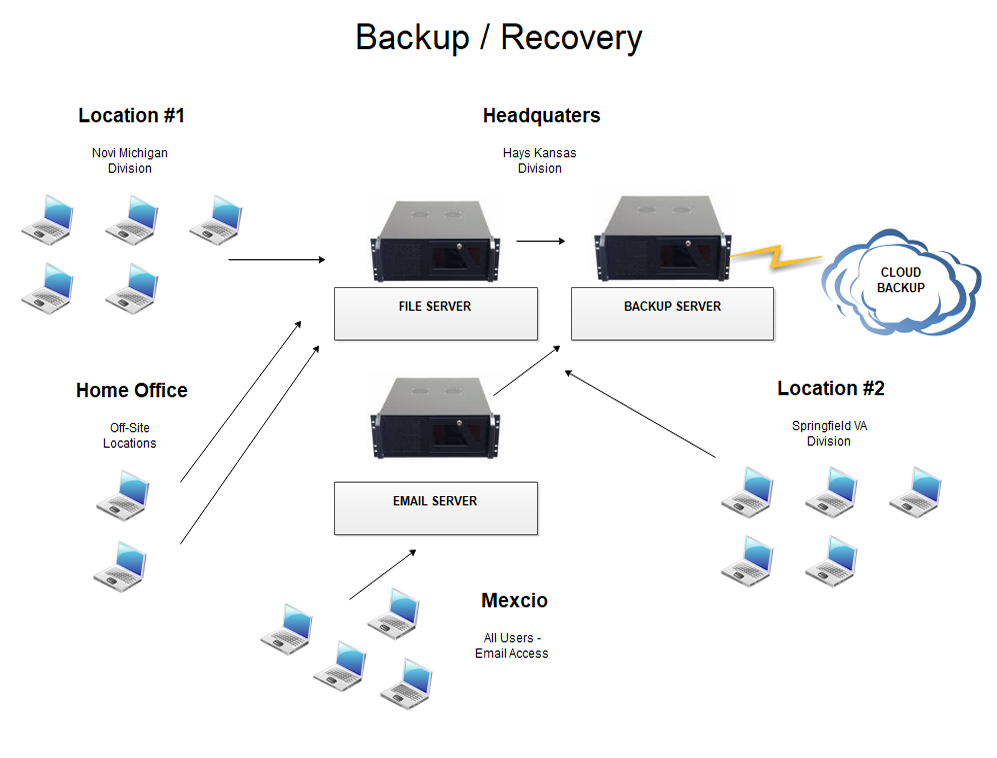
However, some factors, like natural disasters – floods, fires, tornadoes, hurricanes – remain beyond our control. In these scenarios, our best defense is thorough preparedness for when, not if, such a catastrophe occurs. It's crucial to have a comprehensive plan ready for these events. I'm not referring to a basic "here's what we'll do" approach, but rather a meticulously detailed, step-by-step guide – a visual roadmap delineating the exact actions required in the event of a disaster. This plan should be so clear and well-documented that anyone can retrieve it and methodically follow the steps to restore our operations swiftly and efficiently.
On another note, I've discovered that having such a well-structured plan not only positions us favorably in terms of operational security but also has financial benefits. Insurance companies value these proactive measures, which can lead to potential savings on our monthly premiums.
Ive included two sample partial disaster recover plans that we have in place. Just click on the link above next to the PDF Icon.
The secret to getting ahead is getting started. -Mark Twain